
FIBRE
SPOOL
The U-1A Legion is steered over an optical fibre that pays out from the drone as it travels. The spool it pays out from is designed and produced in-house.
In development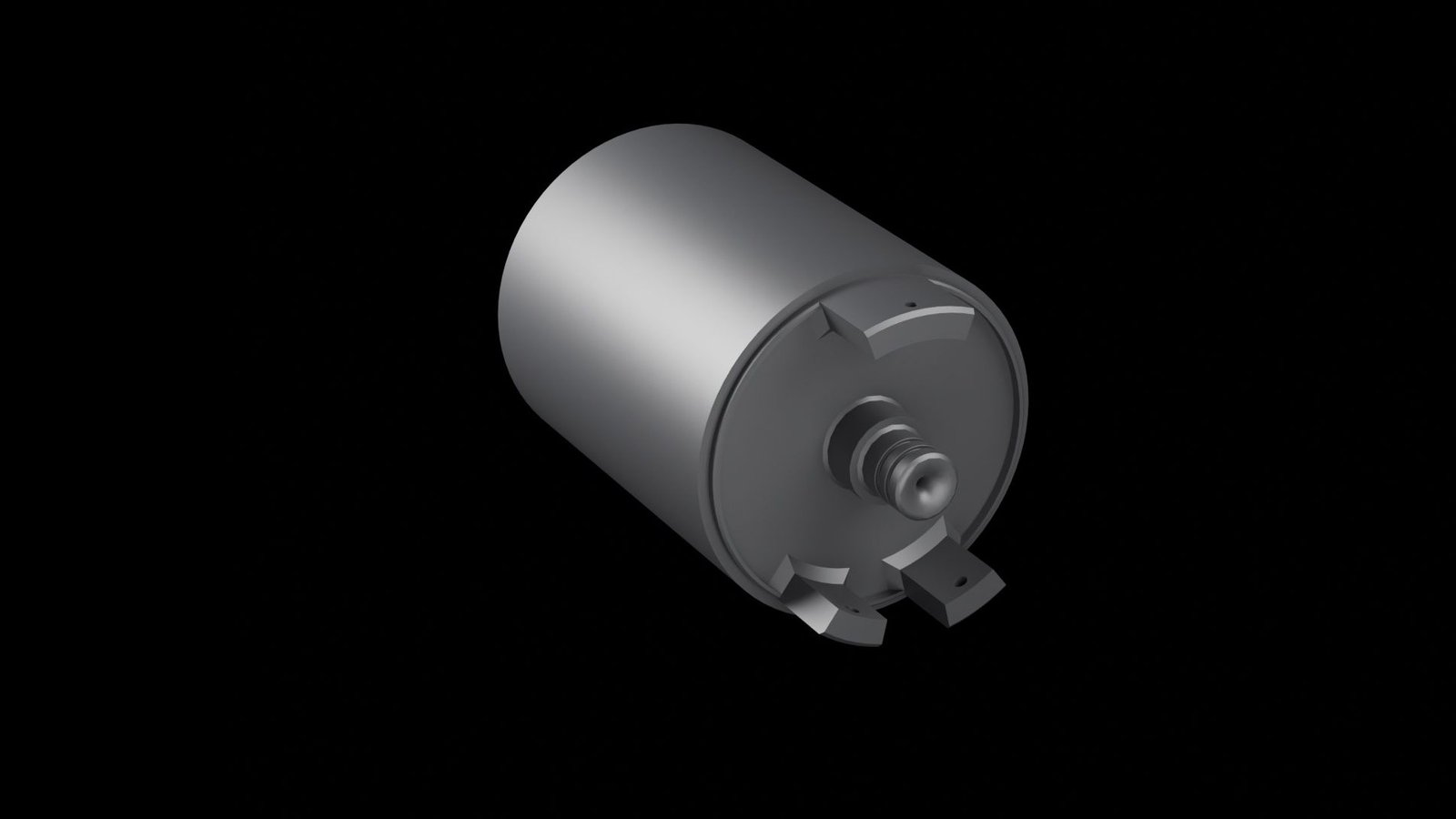 This end fits
into the drone Fibre leaves
frictionlessly
from the back
No radio.
Nothing to jam.
An underwater drone has four ways to talk to the surface. Only one of them brings live video back all the way from the target.
Radio
Dies out within a few metres of seawater.
Sound
Acoustic links reach far, but can only carry a few bytes of data: too little for live video. Anyone listening can hear them, and they can be jammed.
Light and laser
Blue-green light carries video well, but only over tens of metres in clear ocean water and a few metres in murky coastal water like the Baltic. Both ends also have to stay pointed at each other.
Optical fibre
Live video and control both ways, up to 2 km (design target). Nothing goes out into the water, so there is nothing to jam or listen in on.
Fibre
optic.
A typical example of the fibre used on tethered underwater vehicles: a strand of glass with a few protective layers around it. We are testing several types, and the right one depends on the range and the job.
Jacket and yarn
A tough plastic skin over strong yarn from the same family as Kevlar. The skin takes the knocks and the yarn takes the pull.
Buffer
A plastic sleeve about a millimetre across. It cushions the glass against knocks and crushing.
Glass fibre
A coated thread of glass that carries the light. Live video comes up it and commands go down it.
Typical example / drawing not to scale
Our own
spool.
The spool is designed and produced in-house. It decides how far the drone can go and how freely it can move, so we keep it close.
Low friction
The fibre has to leave the drone smoothly while it turns, climbs and hovers. Any drag pulls on the drone or breaks the link.
Our own tooling
Wound on machines we designed and built for the job.
Used once
Every drone carries its own spool and does not come back, so it has to be simple and low-cost to make in numbers.

Talk to us
about range.
The fibre length is not fixed. We can fit a longer or shorter fibre to suit your vessel and the job, so tell us how far you need to reach.